A reusable restaurant website workflow
Turning a repeated website-building task into a workflow that keeps design choices connected to the facts.
- Status
- Workflow in development
- Focus
- Reusable agent skills
- Built with
- Python, HTML, CSS, JavaScript
Repetition without identical websites
Restaurant websites repeatedly need the same practical information: a menu, location, opening hours, contact details and a clear next action. But a café, a neighbourhood tavern and a restaurant for a special occasion should not all feel like the same template.
BuildingWebsite is my ongoing exploration of that tension. I have been turning repeated research and implementation work into reusable agent skills, so a new prototype can inherit useful process without inheriting an unrelated visual identity.
Keeping the facts attached
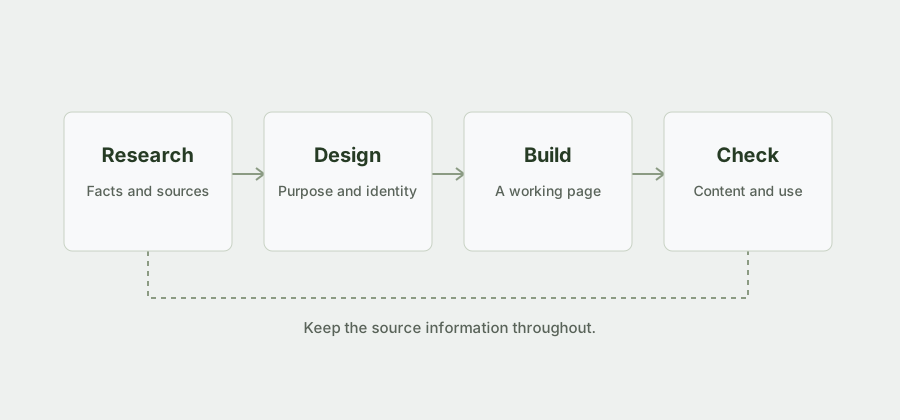
The workflow begins with the available restaurant information and its sources. Conflicting hours or incomplete menus should remain visible as uncertainties during development. A polished page is not evidence that its prices, services or opening times are correct.
Design work then identifies the visitor’s main action and an appropriate visual direction. Recipes and starter layouts provide structure, while choices about imagery, typography, colour and page hierarchy respond to the particular restaurant. Implementation brings those choices into a working responsive page.
Skills as working instructions
The reusable pieces cover website assembly, palette selection and imagery, with orchestration connecting the stages. The important engineering question is what each stage must pass on: source facts, the design decision, selected assets and the checks needed before the next step.
I have also explored a lighter route for quick private prototypes. It reduces process overhead by reusing a selected starter and keeping optional work bounded. It remains useful only if the result is described accurately as a prototype and any missing evidence stays identifiable.
Checking the result
Checks cover mobile and desktop layouts, readable contrast, working menu interactions, image crops and the destination of call/map links. They also revisit the content: a correct map link and an attractive photograph do not establish that every claim on the page is current.
The project has produced restaurant concept demos and reusable skills. Each prototype provides another opportunity to test the process: which instructions improve the result, which facts need checking, and which decisions still need human judgement?
Where it is now
The skills and prototypes continue to evolve through repeated use. The next challenge is making the process more reliable and easier to maintain while preserving room for an individual design. Reusable instructions are most valuable when they improve the result, rather than merely adding more steps.